Case studies / 02
Apps cloud readiness & portfolio management for faster migration
- Client
- VMware Tanzu
- Products
- Cloud Suitability Analyzer (CSA) · Project IRIS
- Users
- Solution architects & engineers
- Deliverables
- CSA redesign plan · CSA/IRIS integration · advanced concepts
# The context
Migrating to the cloud is a significant, complicated endeavor — it needs a realistic plan for the whole application portfolio, mapped out first.

VMware and VMware Tanzu have a specific approach to this. A detailed technical analysis of each application’s cloud readiness determines the best migration approach and strategy. On top of that, a manual business analysis of single apps determines which ones are the most business critical.
The two scores — technical and business — define the final strategy: which apps will be retired, refactored, rehosted, replatformed or retained.
# The products
CSA — Cloud Suitability Analyzer
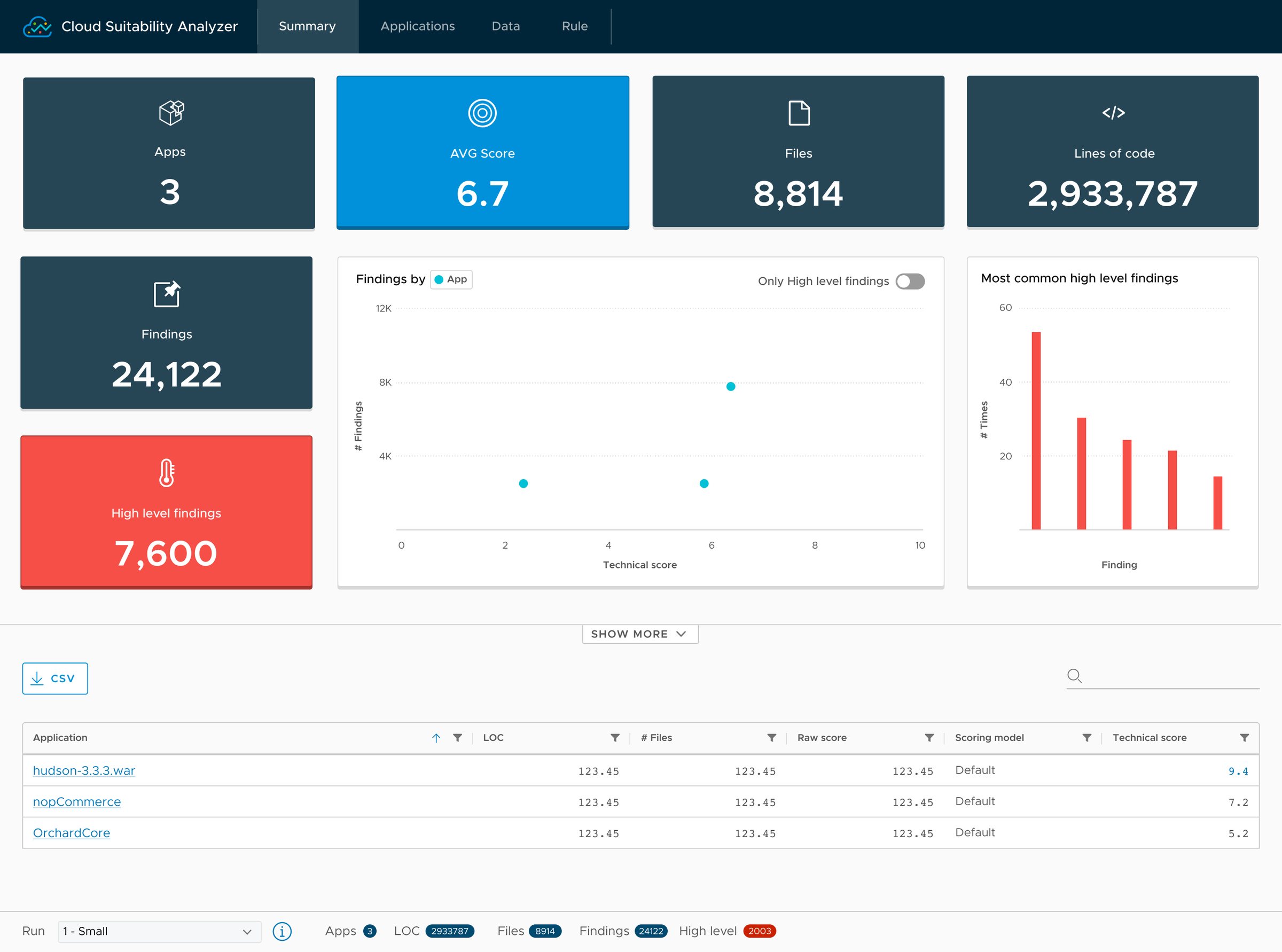
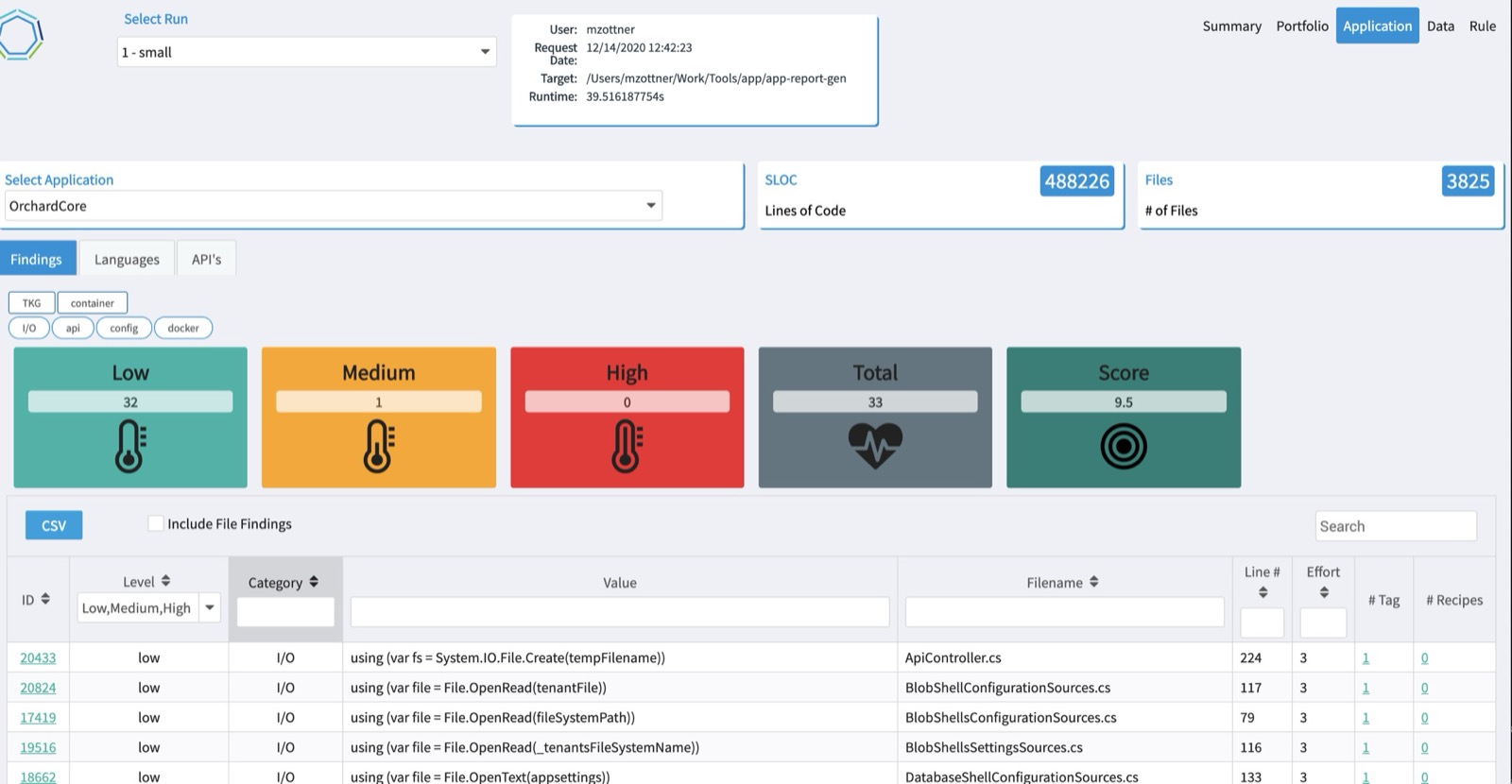
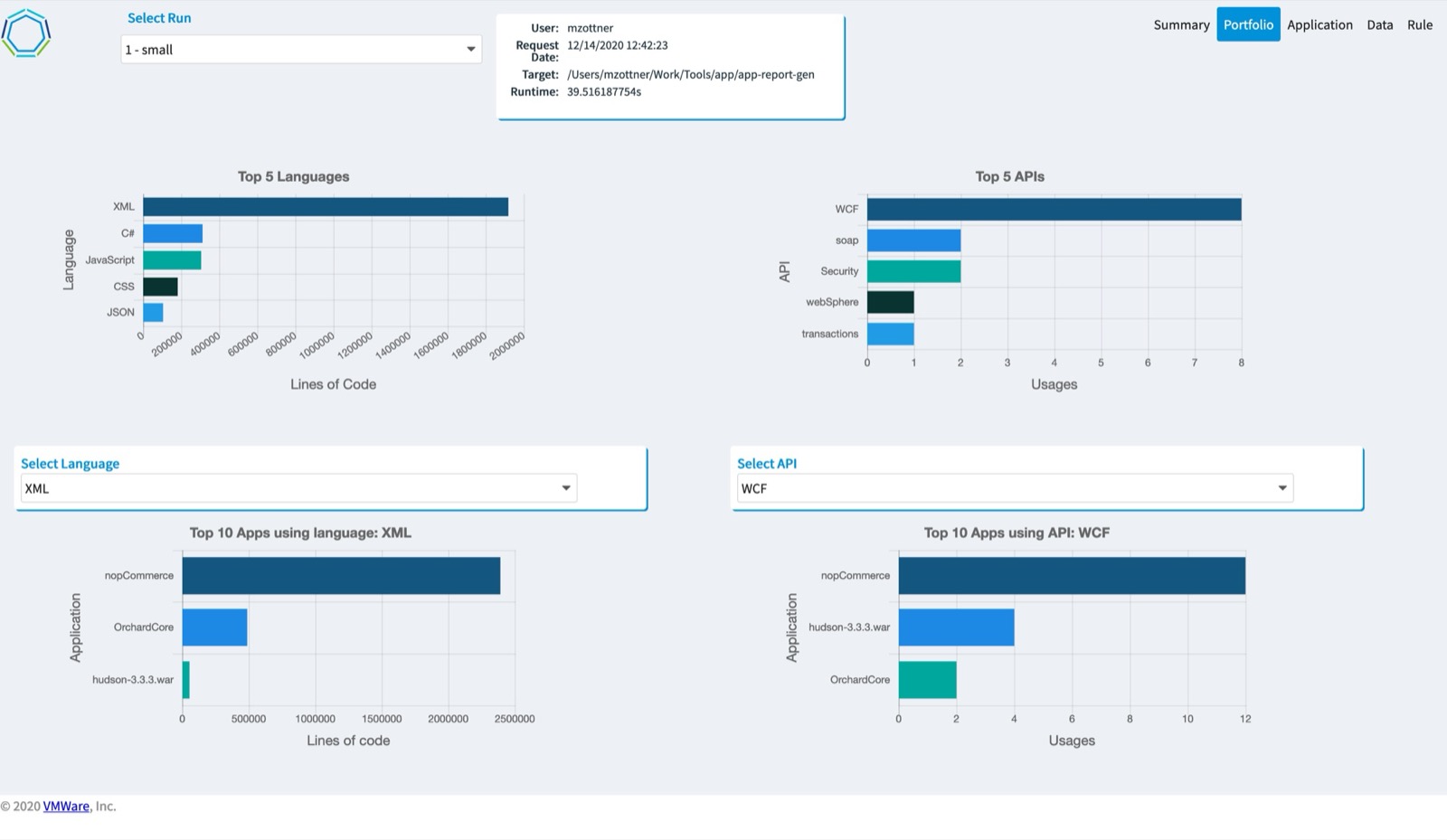
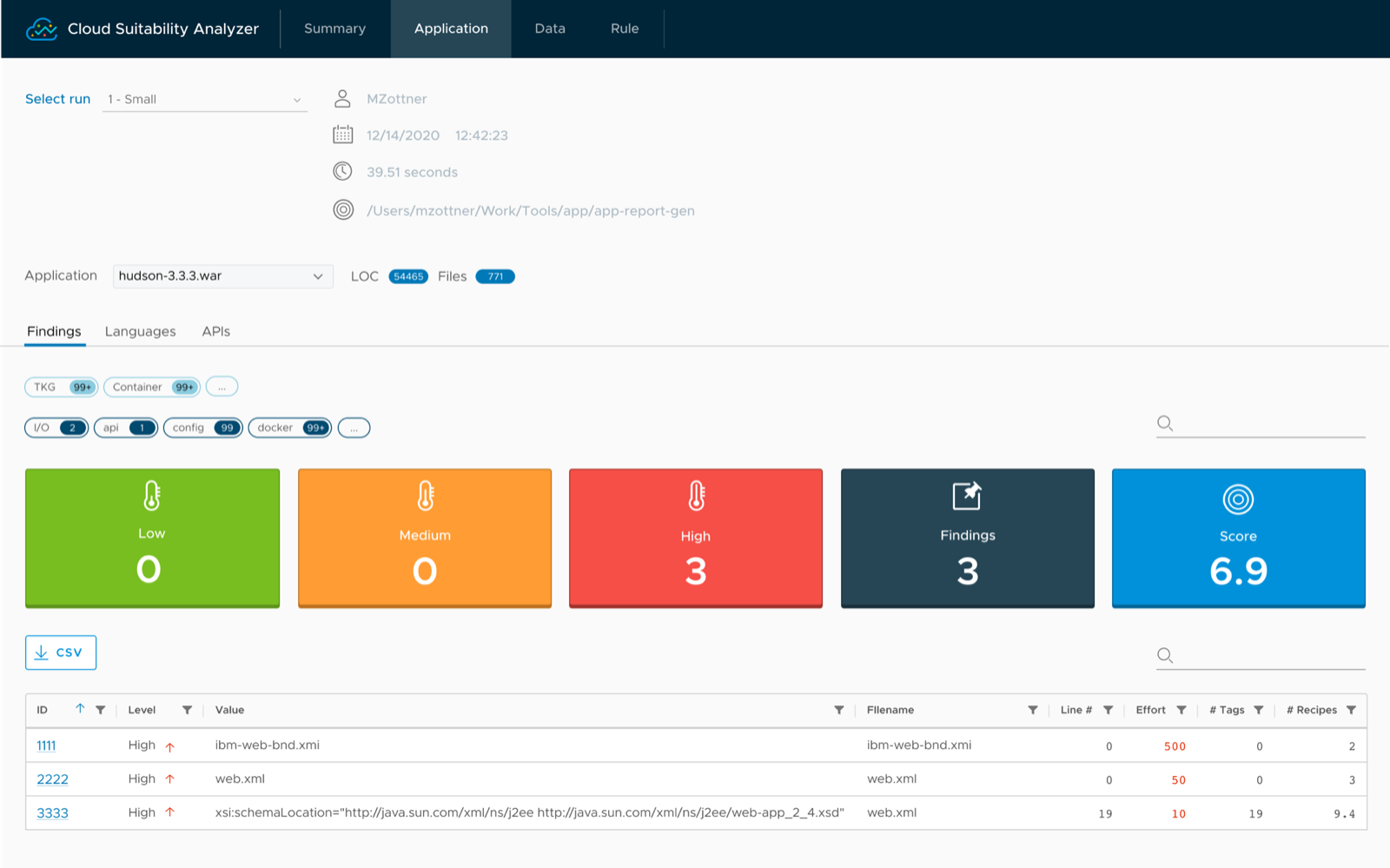
- Scans source code and generates a technical score (1–10) for each application’s cloud readiness
- Runs right from your laptop and evaluates large portfolios quickly, for objective, data-driven decisions
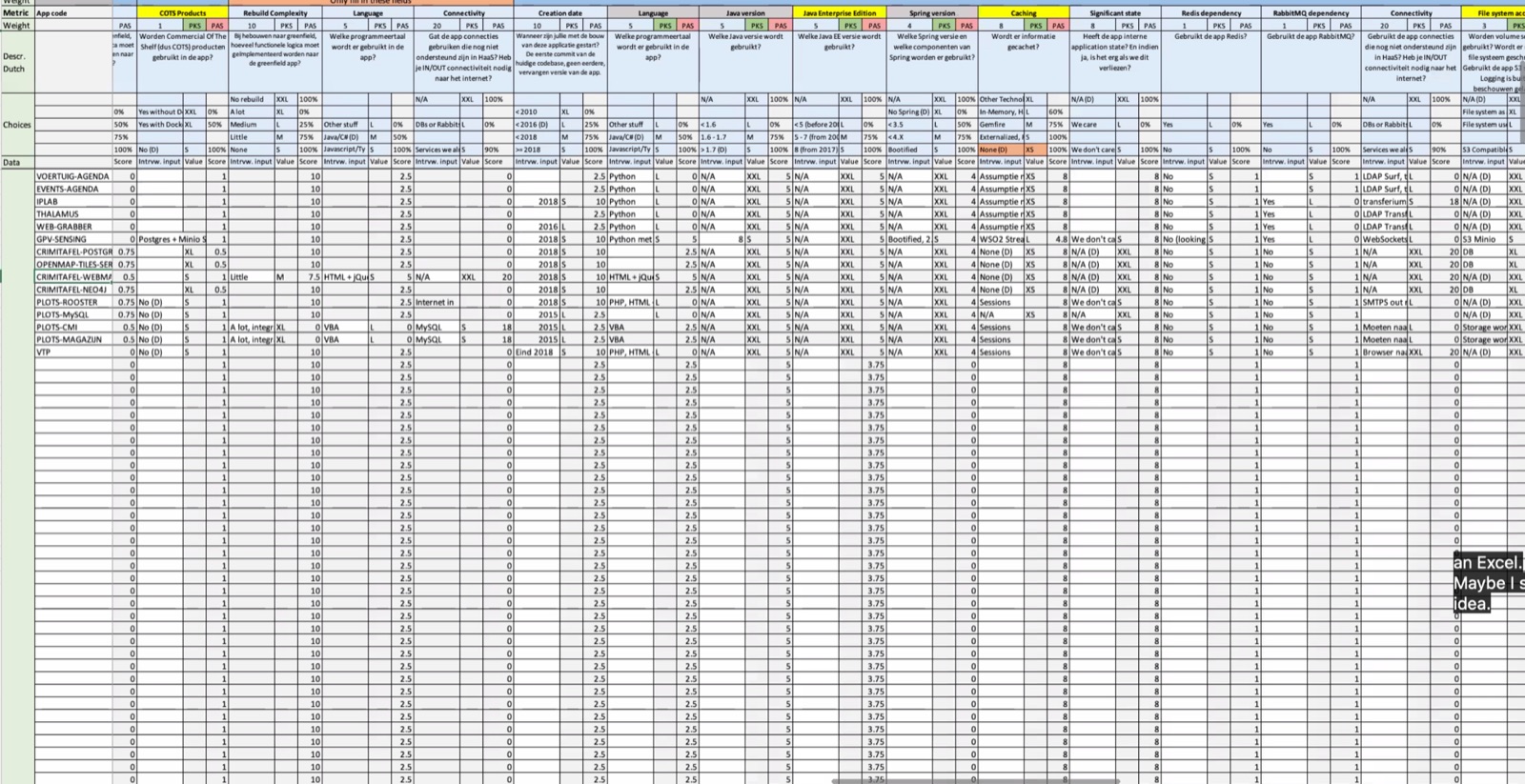
- Business analysis happens in spreadsheets, manually merging in the technical score
- Open source: available to any customer, no license or vendor dependency
Project IRIS
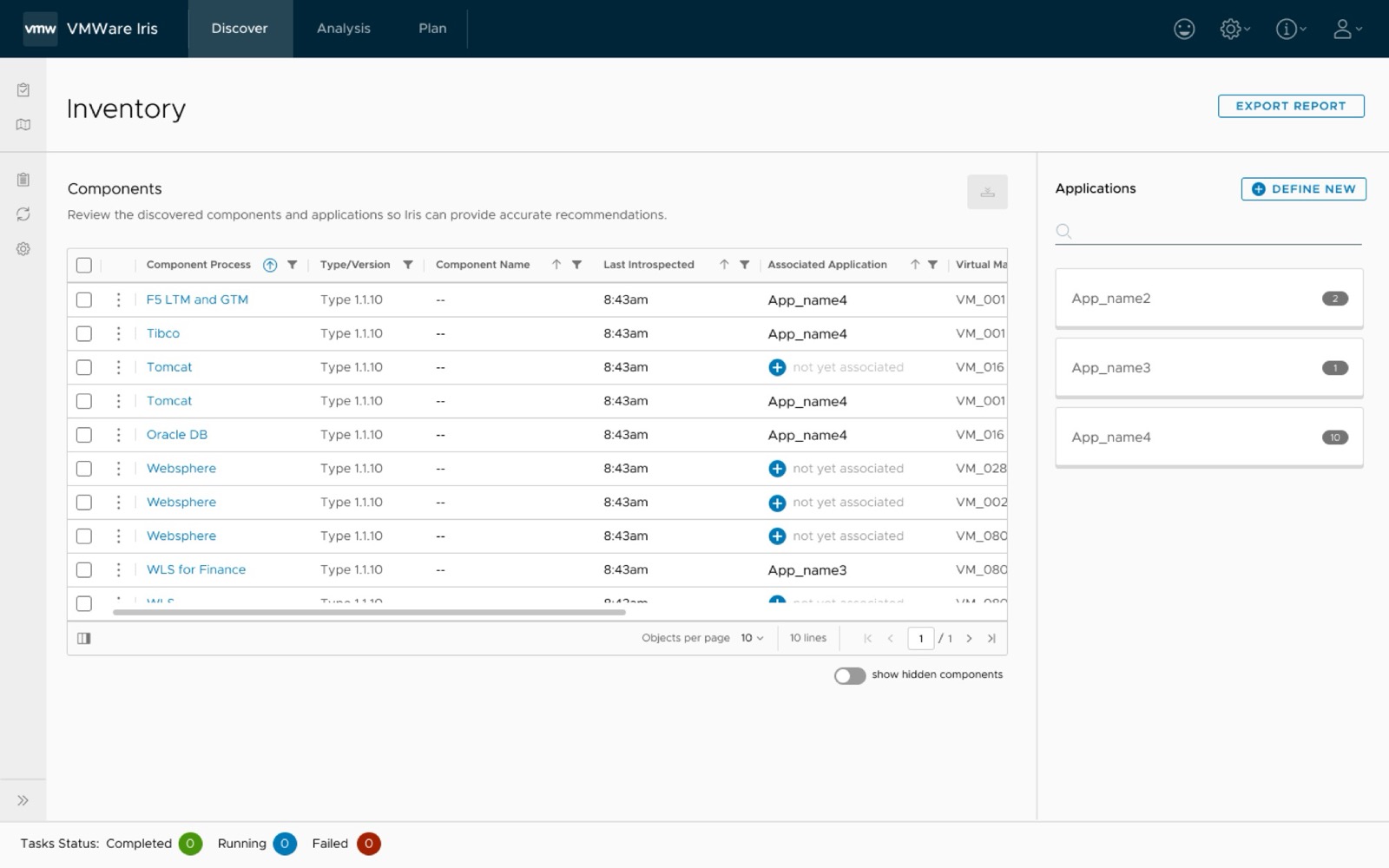
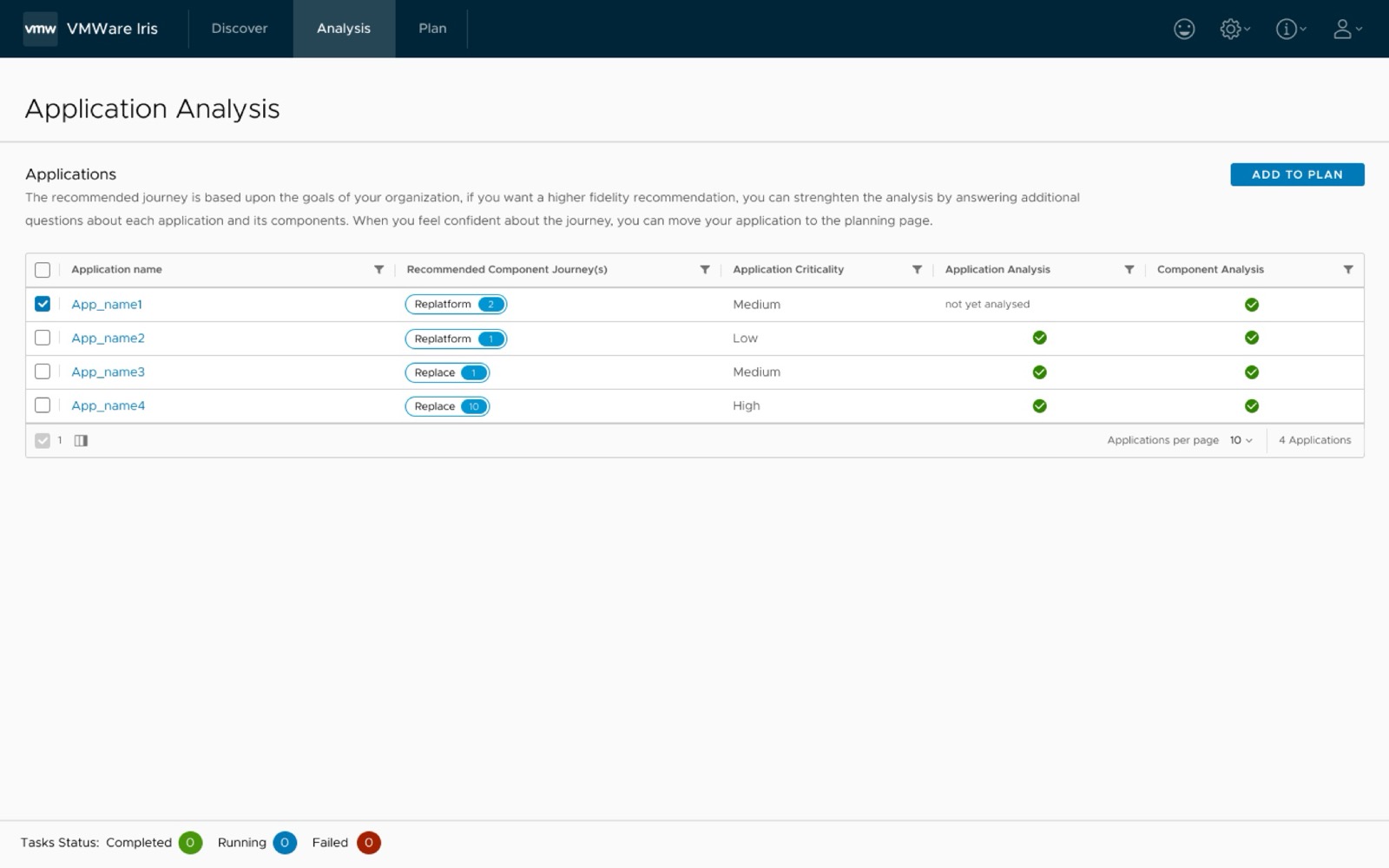
- Discovers and analyzes an organization’s full app portfolio — a utility for running portfolio navigators
- Helps reduce operational expenses and improve maintenance windows
- Crawls virtual machines with a technical analysis to assign one of the 5R dispositions, ideally at server level
- No longer a commercial product, just a licensed service (still vendor dependent)
# The problem
- The two products ideally share the same usage and goal
- IRIS’s technical analysis is not as refined and customizable as CSA’s
- CSA has a more cumbersome way to connect and scan an application portfolio
- The standalone CSA hadn’t had much design love: most features were added on “personal” choice, not on user needs
- Neither integrates a business analysis to drive a better, more tailored cloud migration strategy
# The approach
CSA
- Recommend which problems to solve in the standalone tool
- An iterative redesign / facelift plan
IRIS
- Recommend a user journey for CSA and IRIS integration
- First concepts for advanced features (business analysis, application archetypes)
Discover
- Define user targets, gather requirements
- Research setup, assumptions
- User and expert interviews
- 1st draft of the integration, 1st recommendations on CSA
Interviews: 5 solution architects / engineers · 3 experts · 2 stakeholders
Validate
- Validate proposals through user interviews
- 4 concepts: CSA facelift (2 iterations), CSA redesign, CSA/IRIS integration
- Archetypes & business analysis concept
- Final recommendations and handover
Validation: 3 solution architects / engineers · 2 stakeholders
# Discovery
Solution architect / engineer
Jobs to be done: understand the quality of the software and the customer’s business drivers; get recipes for fixing issues.
Main scenarios: analyze large app portfolios, crawl VMs to create 5R dispositions, set a cloud migration plan.
Current issues: scattered touch points, systems not integrated, hard to get the code to start the analysis, large portfolios to handle quickly, each analysis with its own pros and cons.

What we believed before speaking with users
CSA
- Has a lot of features that are not used
- The experience could feel cumbersome
- Can run only locally, and not everything can run in it
- Sharing code is a concern for clients
- The technical score is not the only metric that matters
- The tool needs tuning per customer
IRIS
- Is known; people already have experience with it
- CSA’s technical score is more reliable than IRIS’s
- Analyzes on multiple levels (app vs. component vs. code)
- There are constraints on the analysis
- Non-technical metrics are needed for a reliable outcome
- Potentially more trustworthy than CSA for customers
What we learned
- ValidatedThe CSA technical score is the most relevant thing to integrate in IRIS
- ValidatedCustomers resist uploading their source code into CSA
- ValidatedManual synthesis happens after using CSA
- Partly validatedCSA runs only on local machines — how this would work in IRIS (server level) is still unclear
- Partly validatedThe biggest hurdle is trust in the results, in both CSA and IRIS
- Partly validatedSecurity is a challenge for clients when uploading and scanning code
# CSA improvements
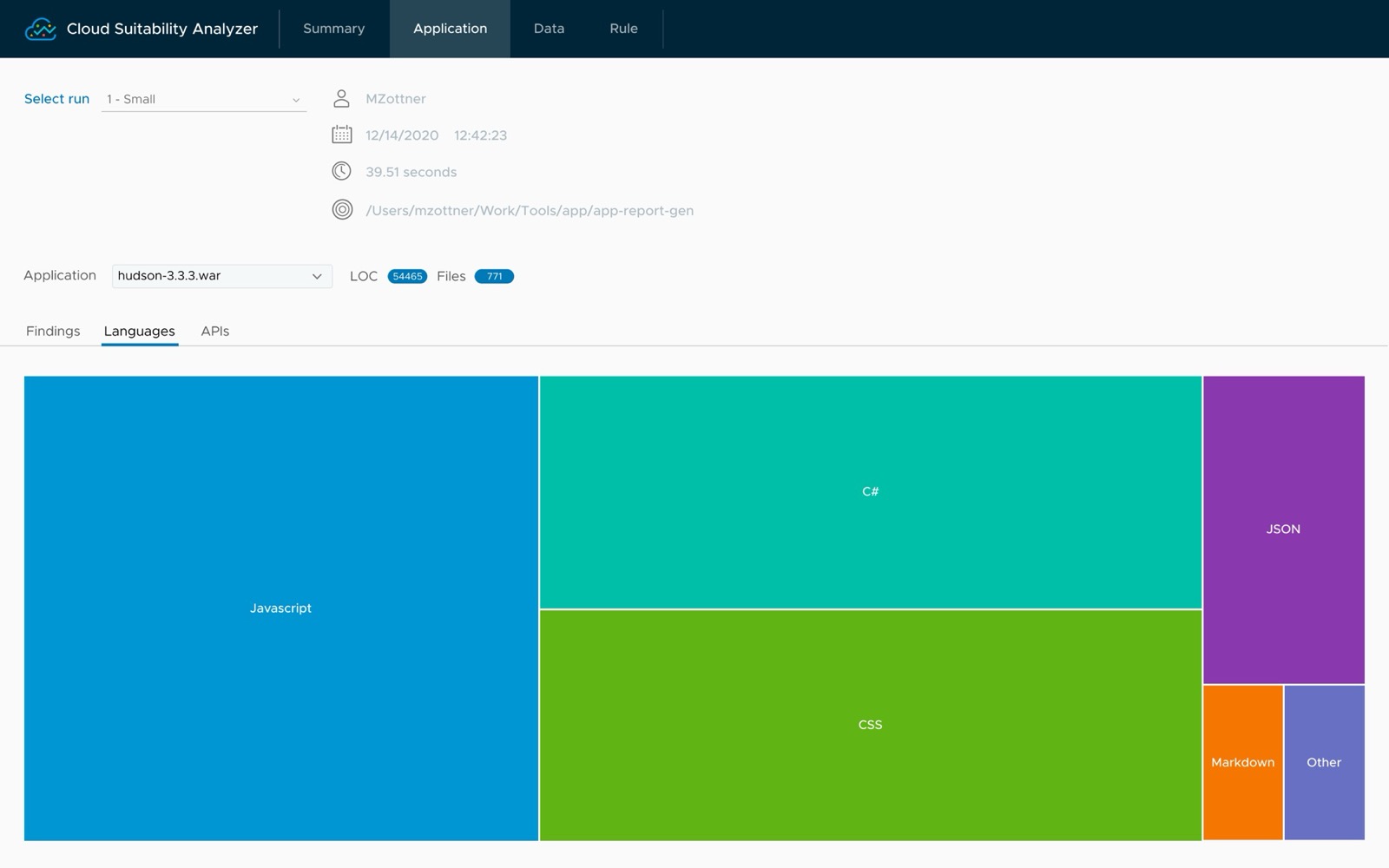
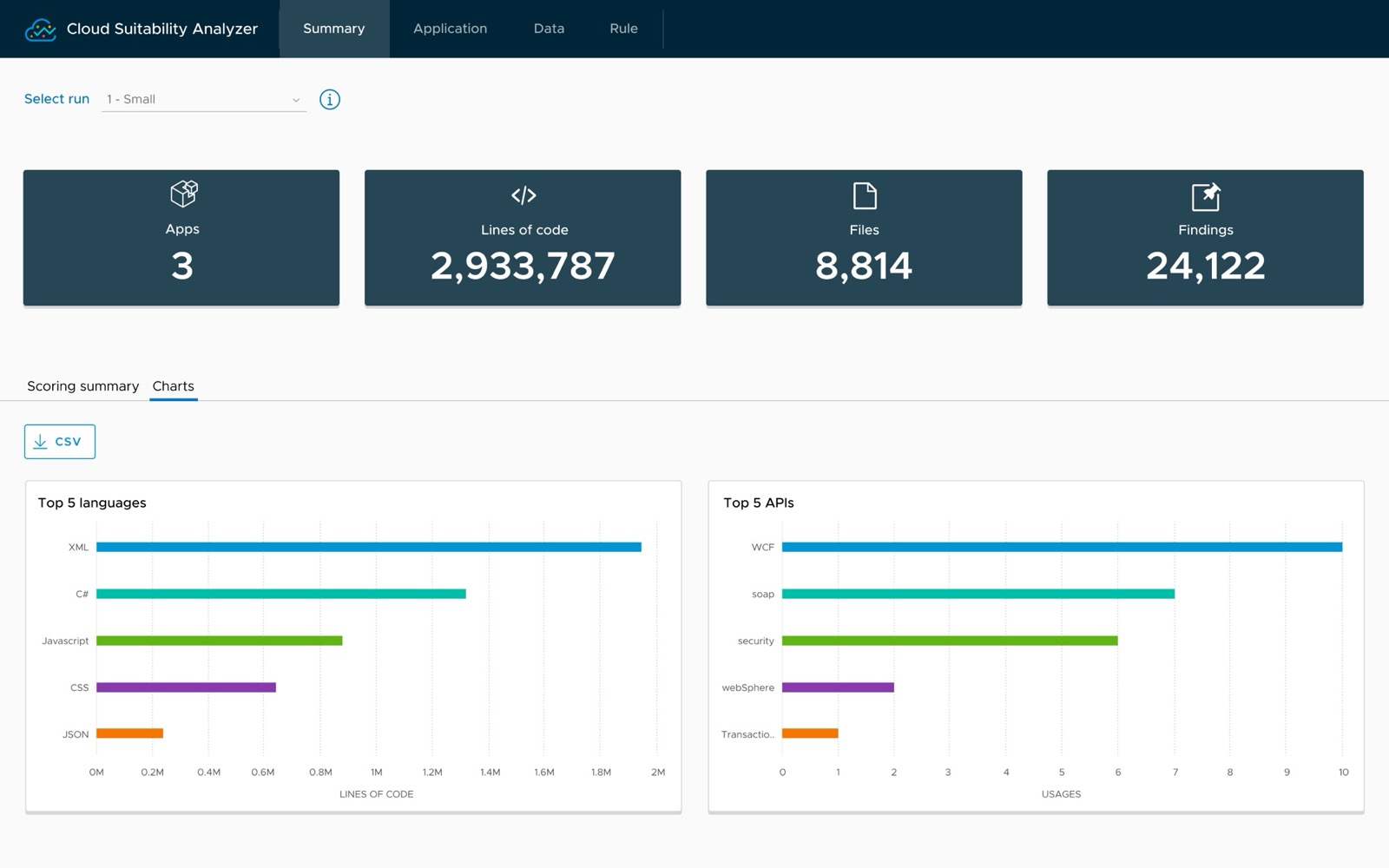
Interview insights became a feasible, iterative plan, ordered by design / development effort:
01Facelift
- Alignment with VMware Clarity
- Dataviz guidelines
- A more visual executive summary
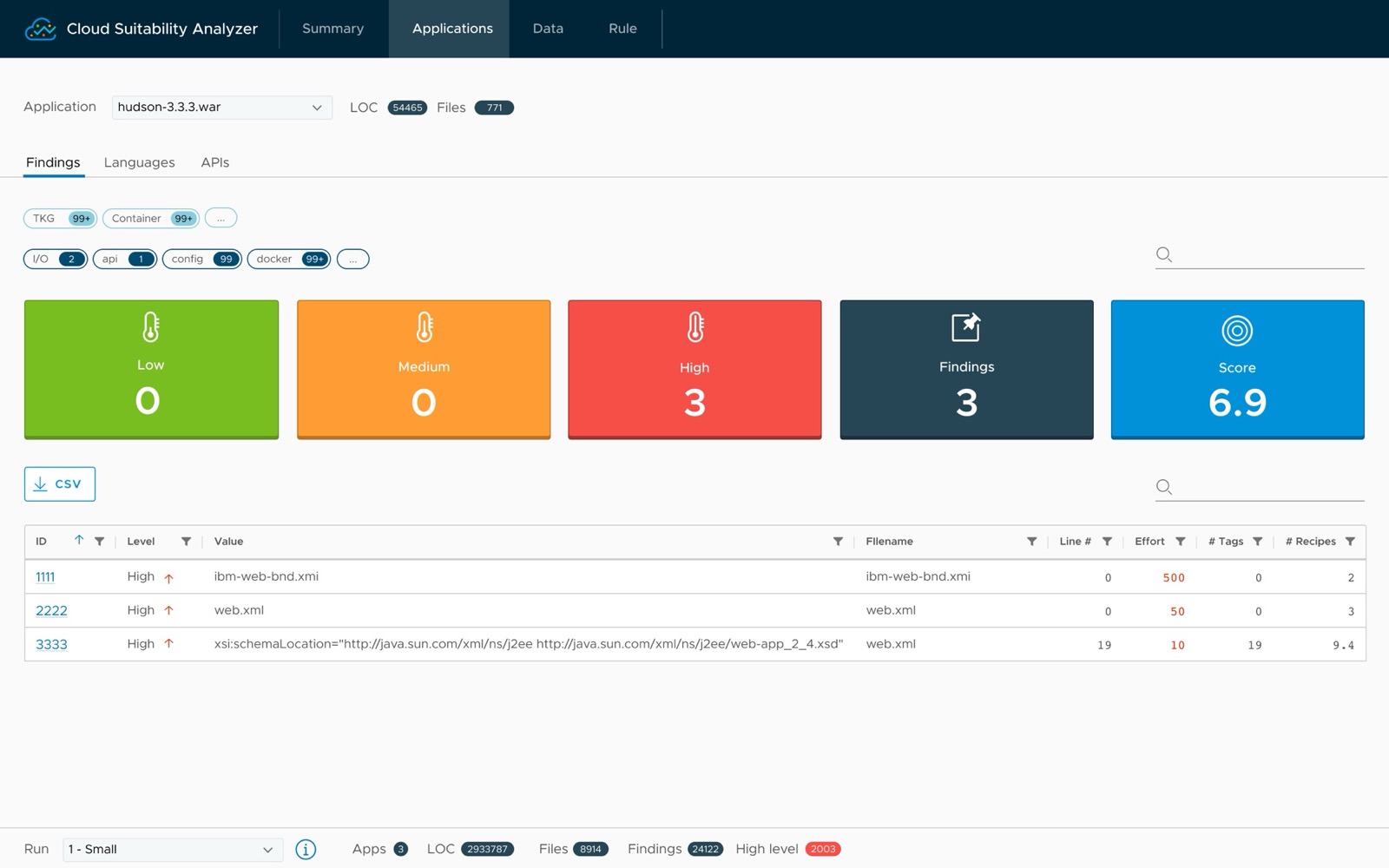
02Usability
- Better UX
- Recommendations
03Information architecture
- Navigation
- Data flow
- Hierarchy of information and tasks
04New features
- Advanced visualizations
- Not in scope yet — needs ad-hoc research at the right time
# CSA / IRIS integration
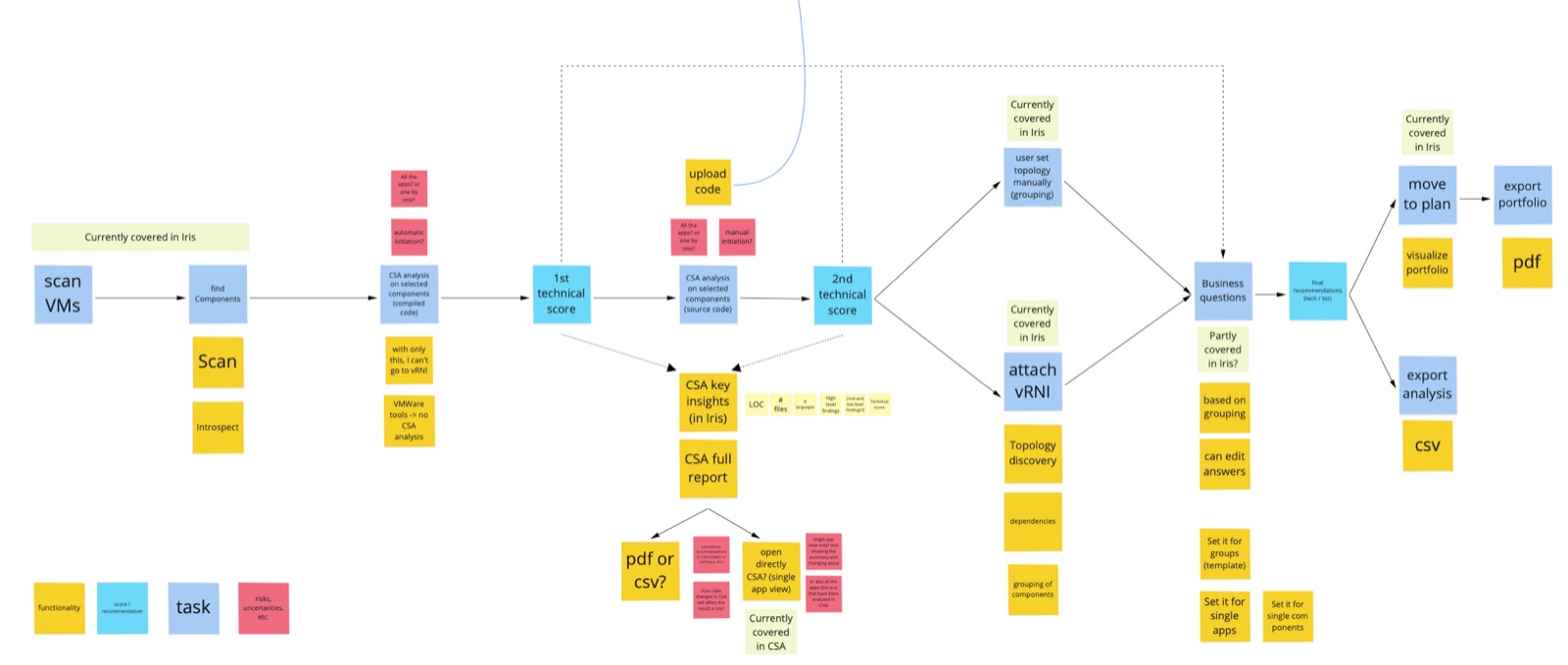
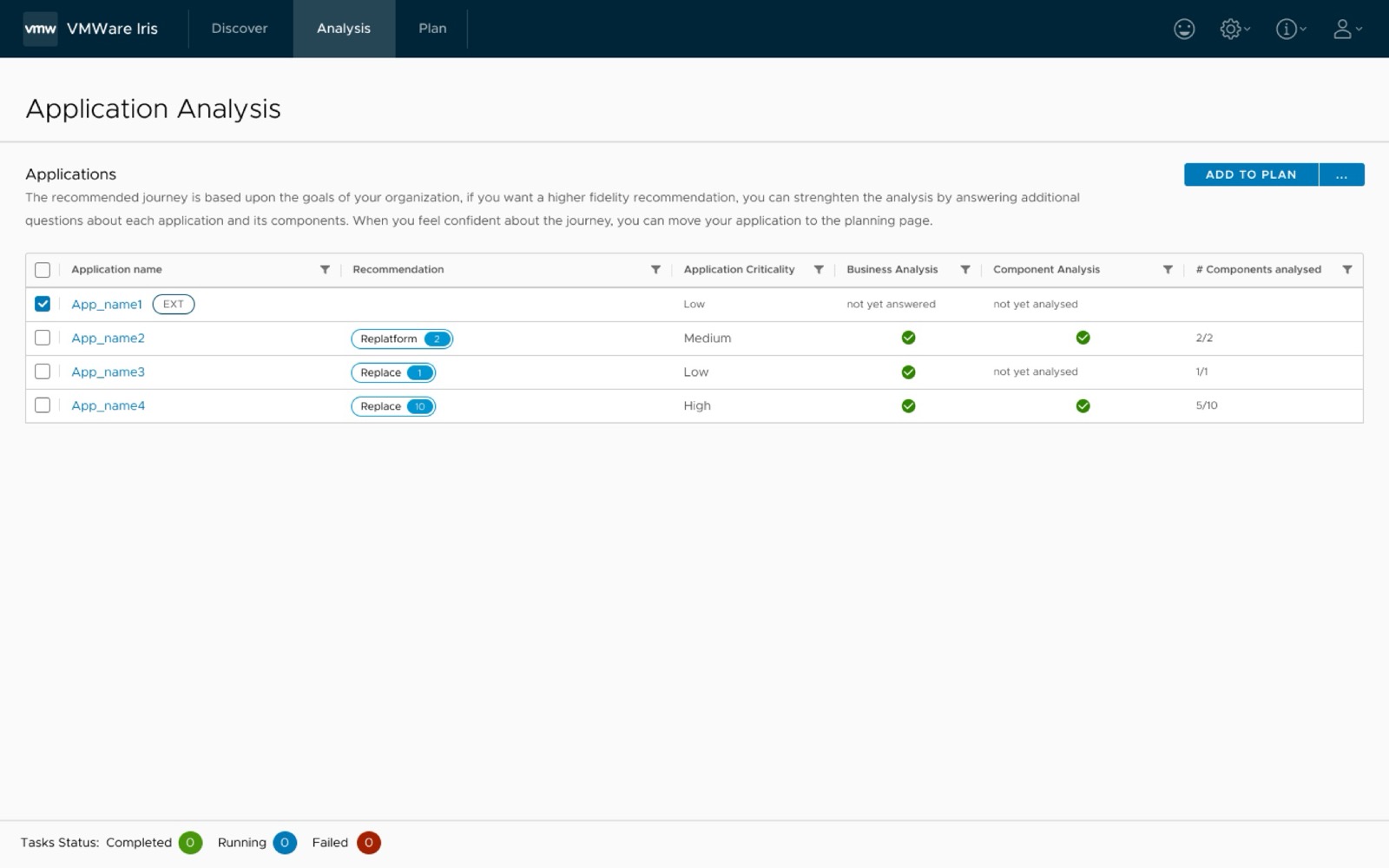
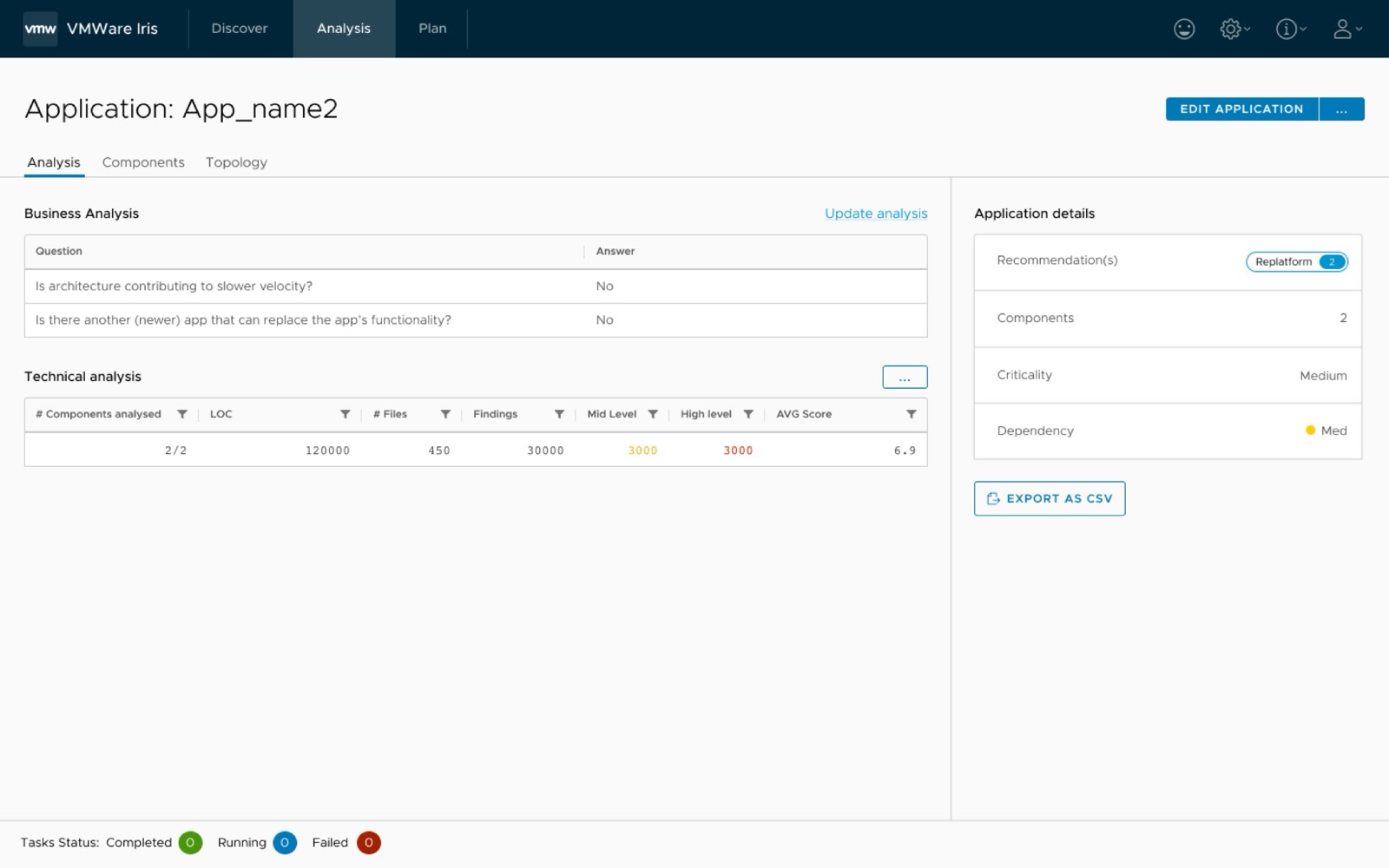
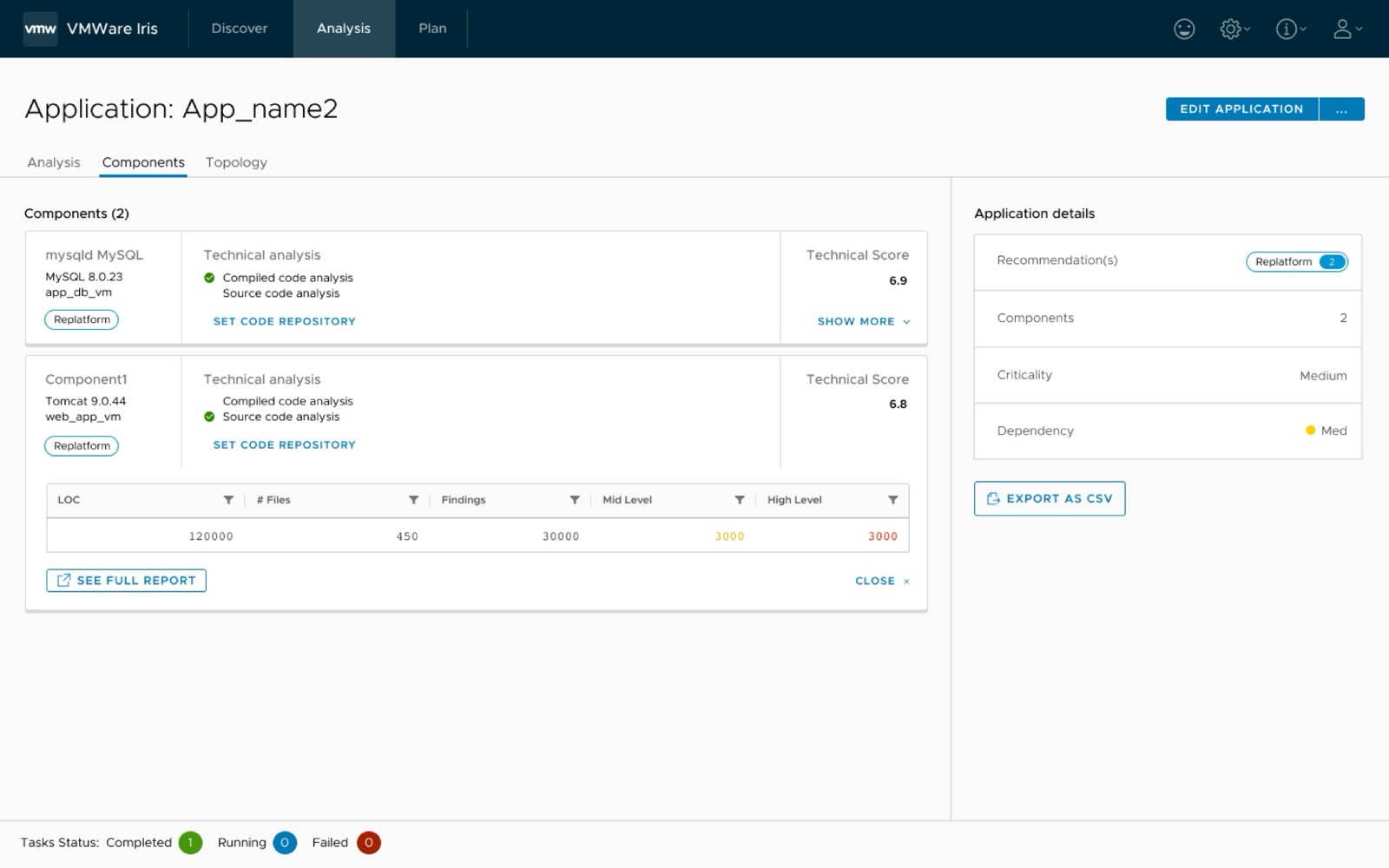
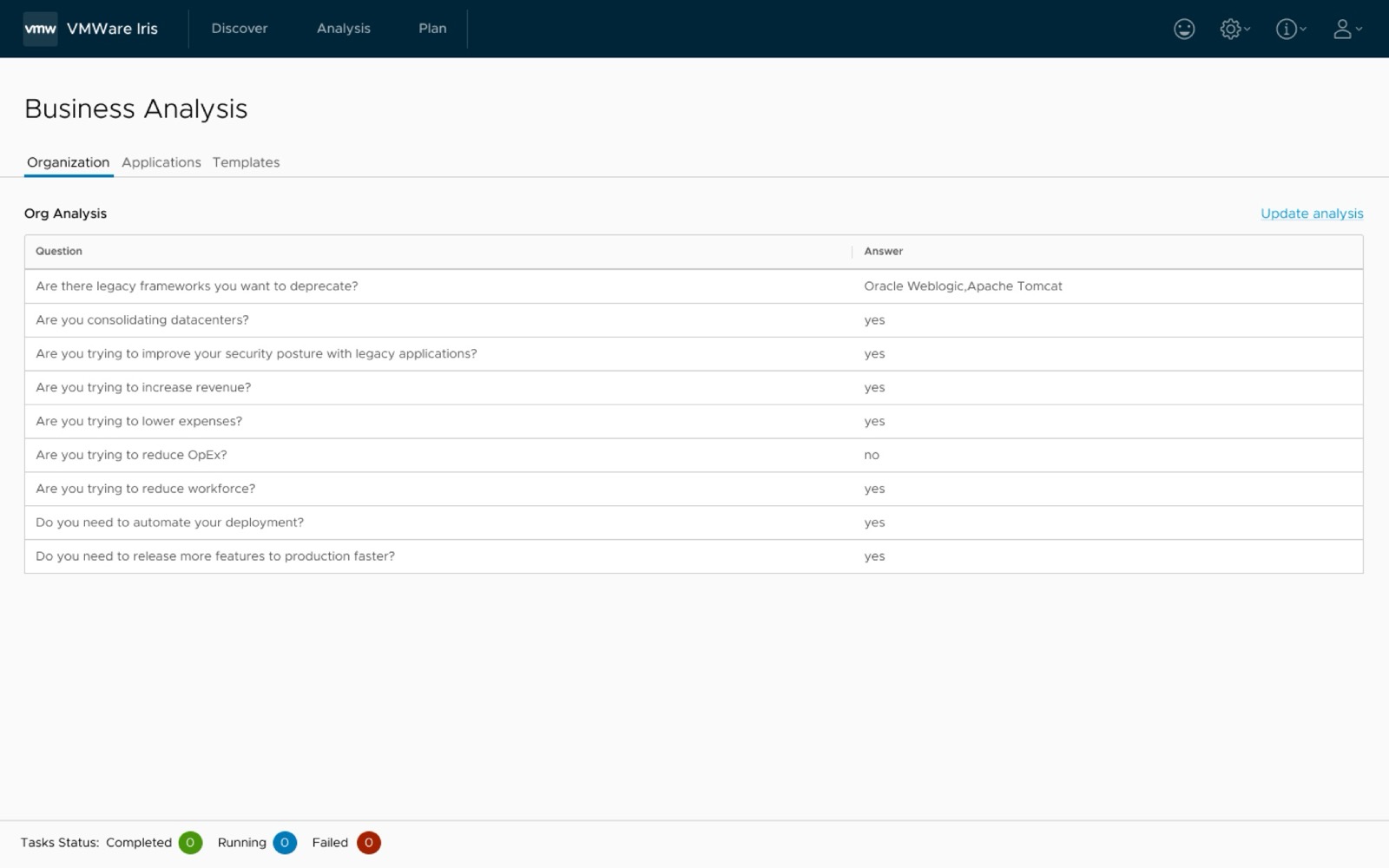
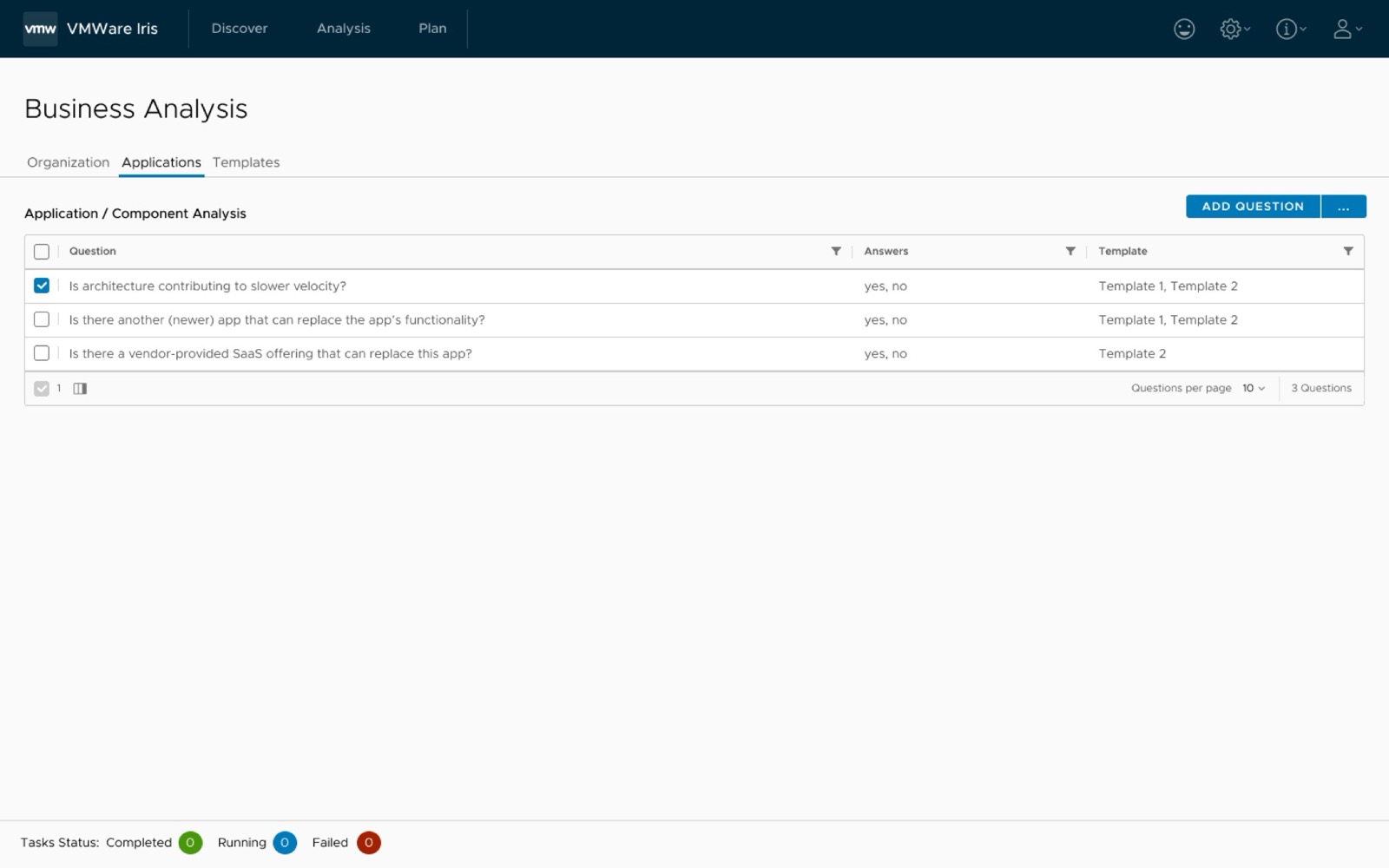
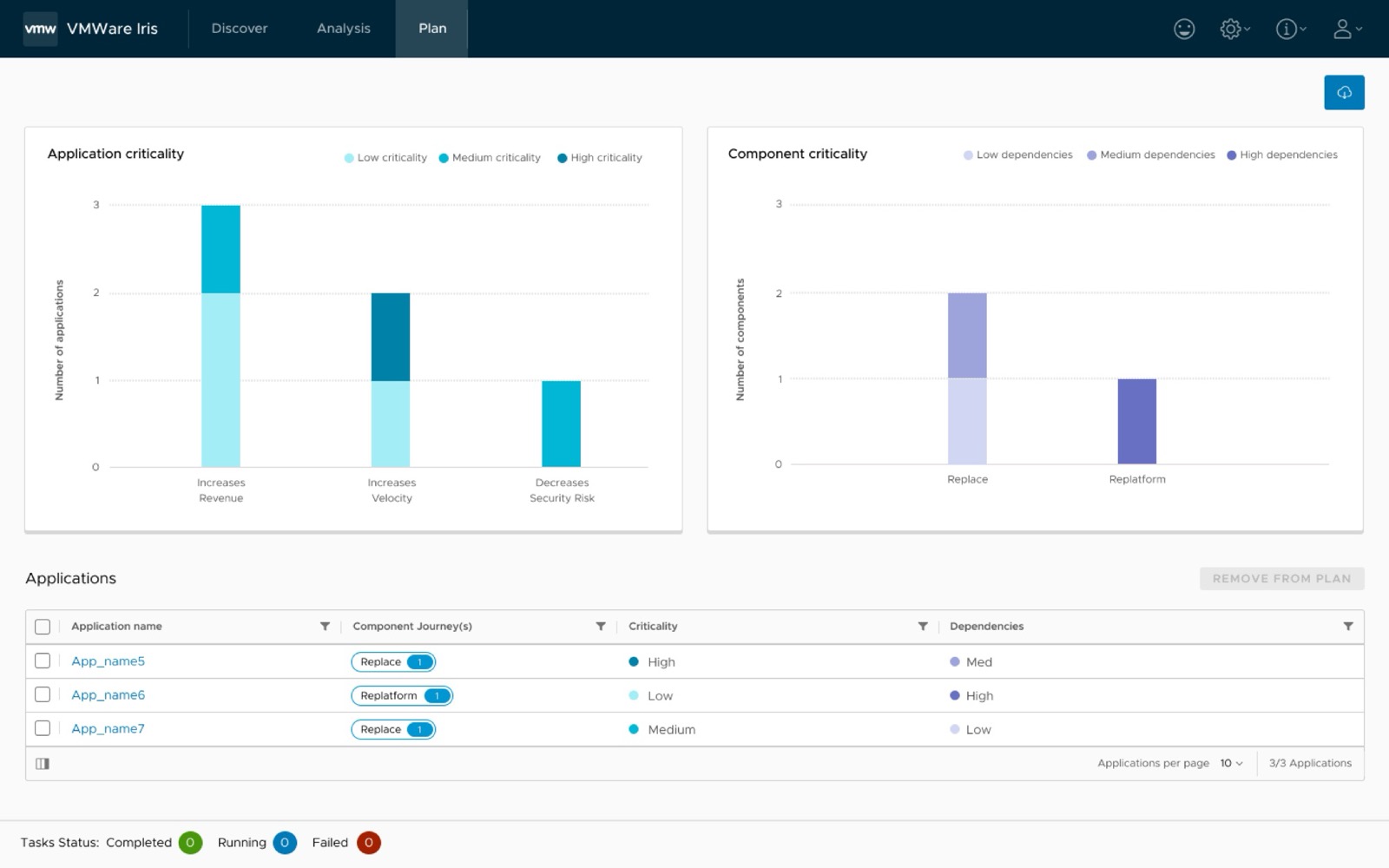
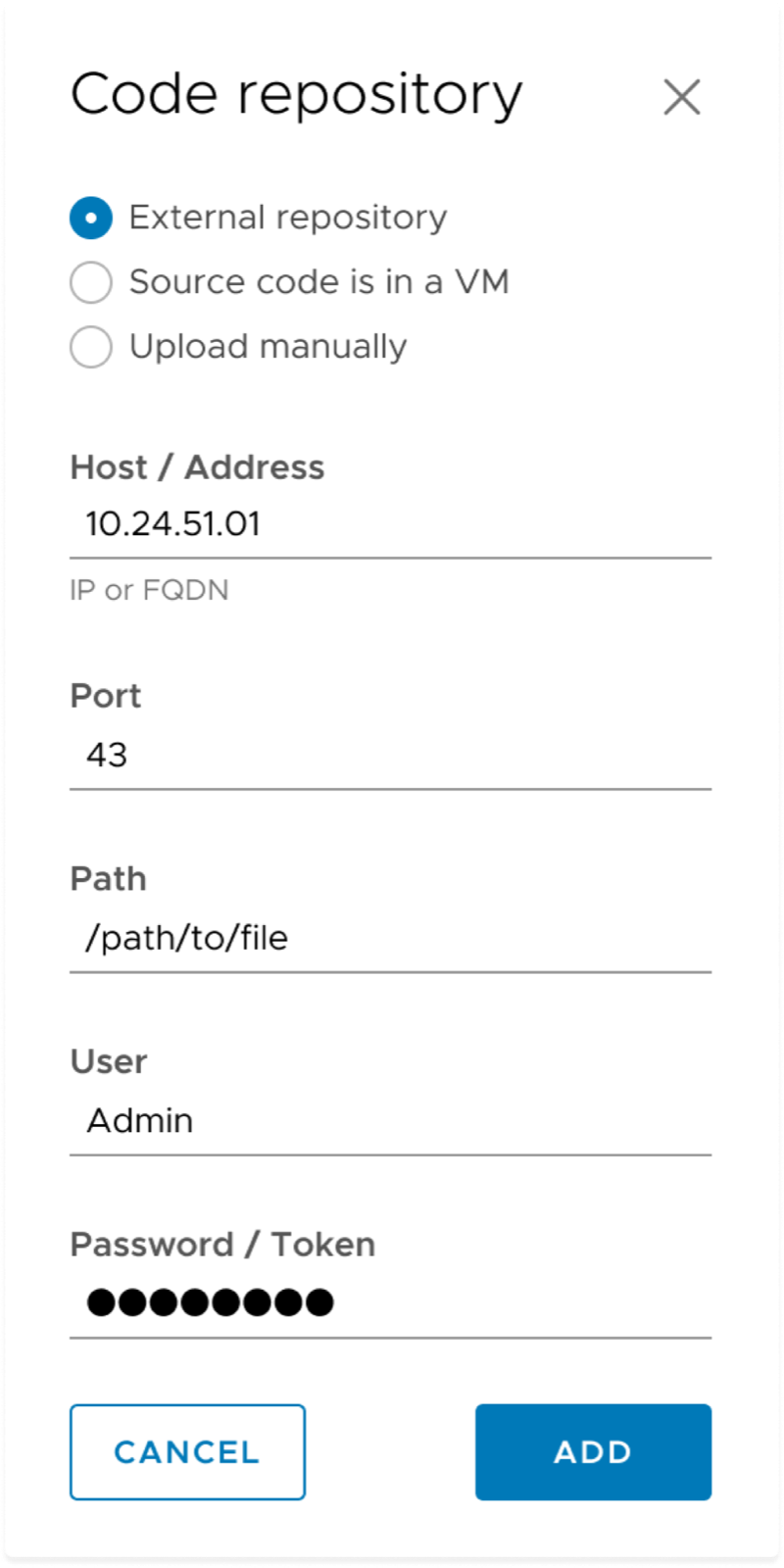
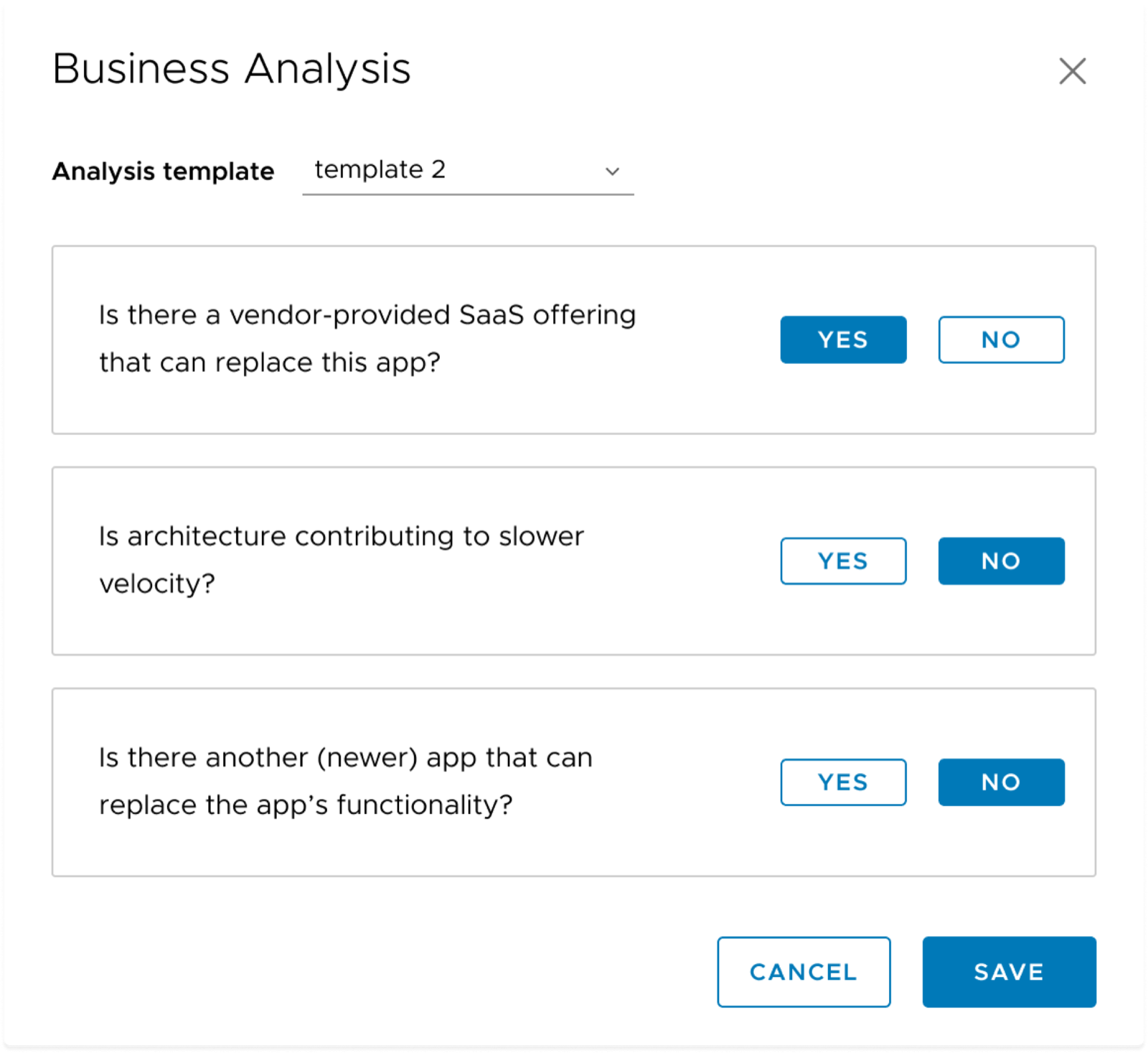
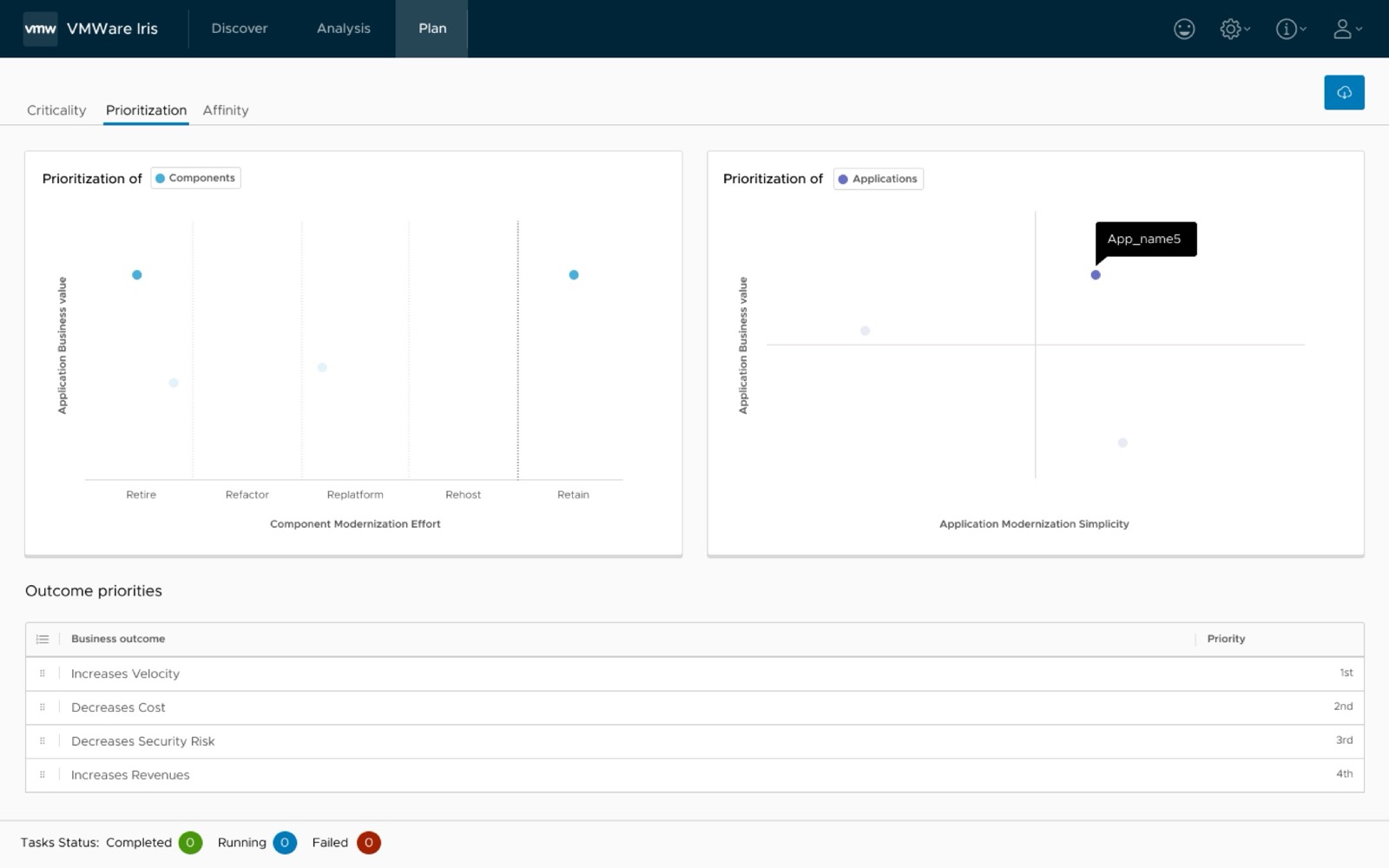
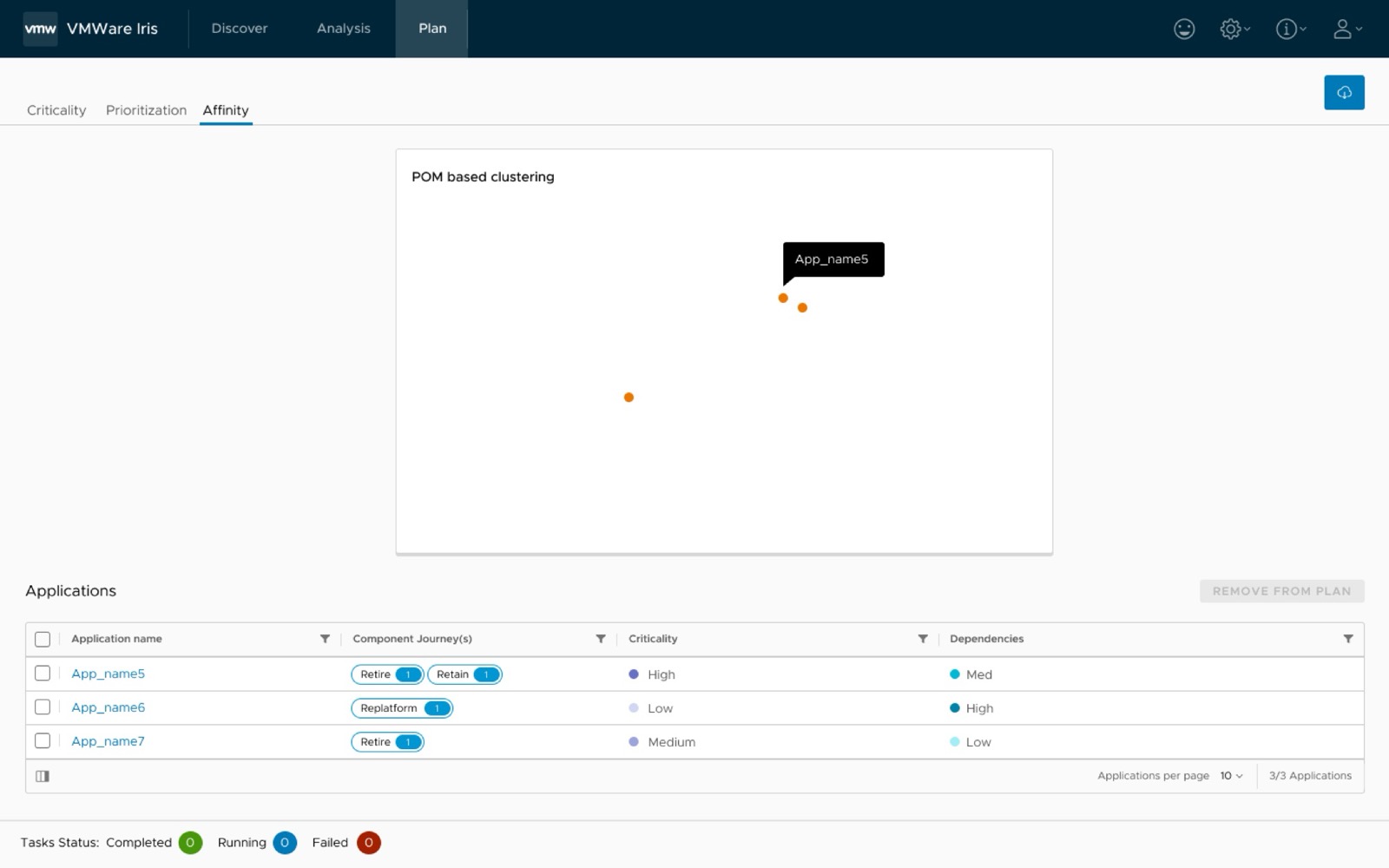
One workflow from scanning VMs to a migration plan: portfolio and application analysis, component analysis on connected code repositories, a business-analysis overlay at organization and application level, and the resulting plan.
# Advanced features
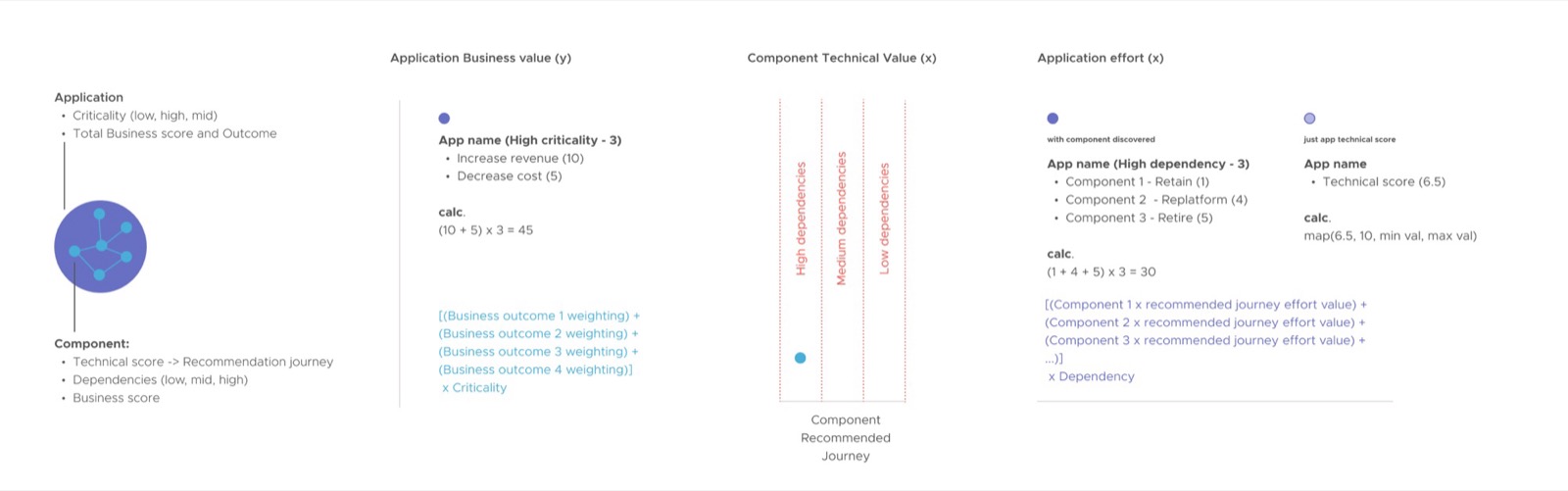
We defined how an application’s technical score relates to its components’, to visualize dependency levels and the overall effort of migrating an application to the cloud.
CSAi
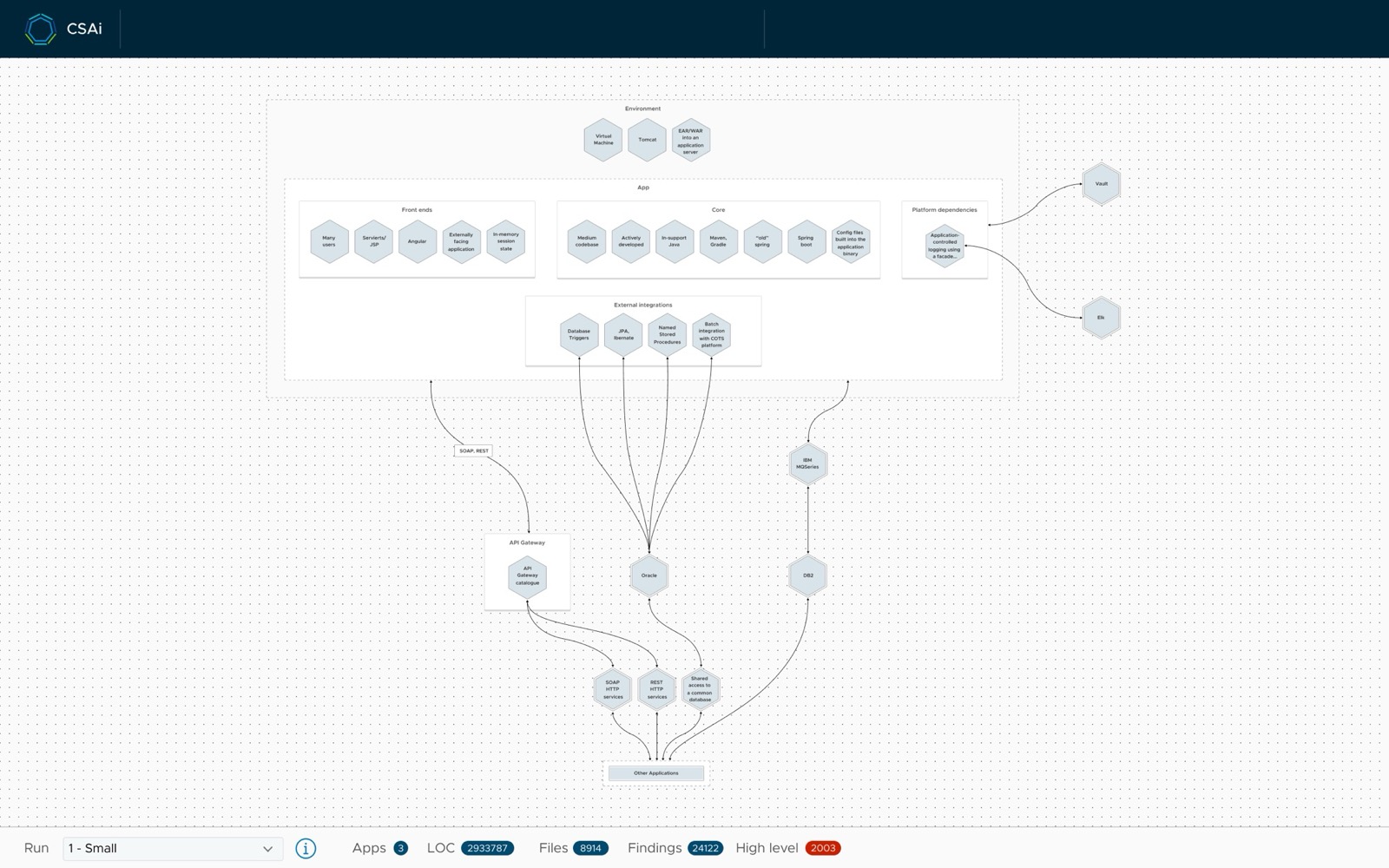
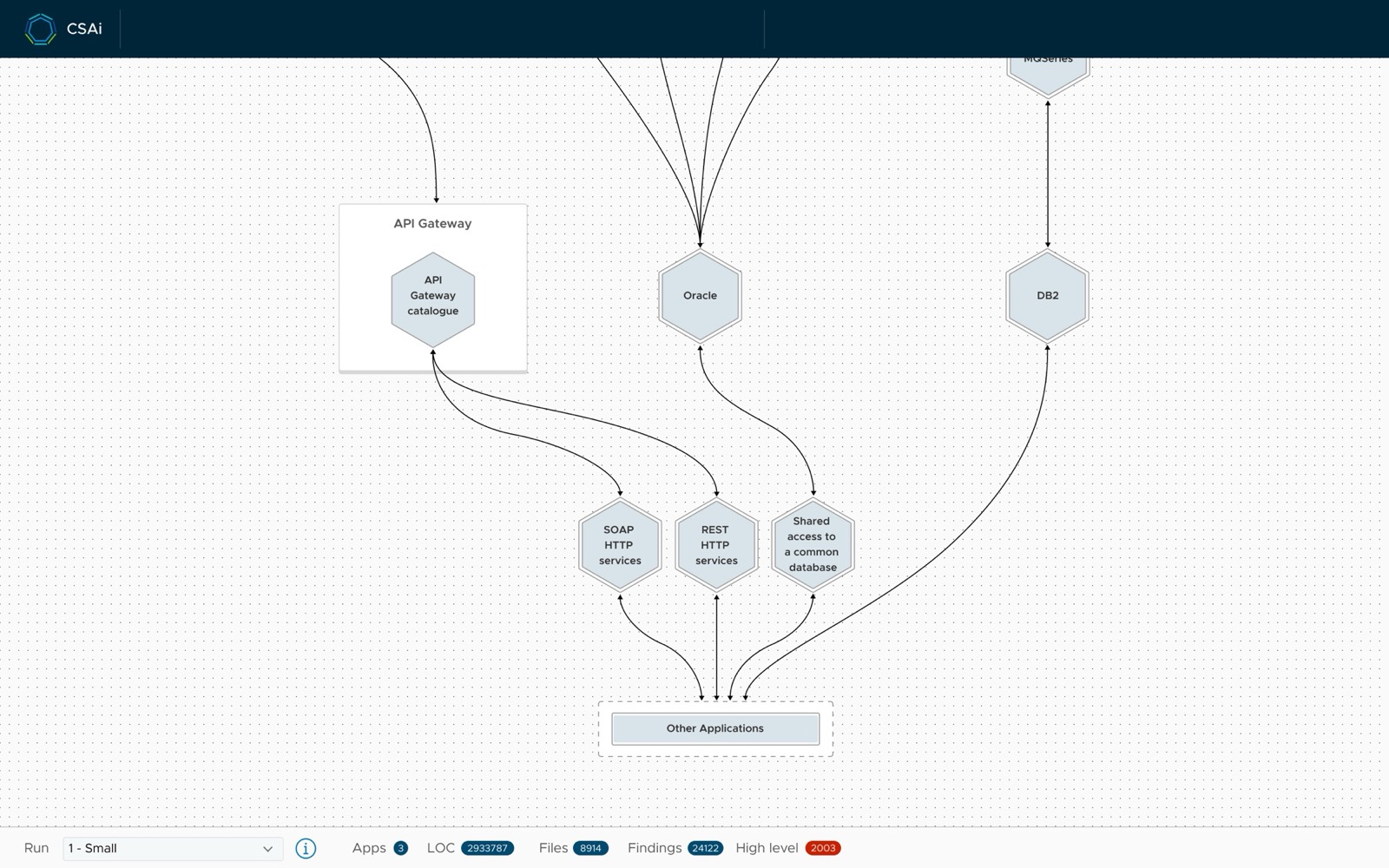
A concept that uses AI/ML to scan an application and automatically define the archetypes of its components, then visualize a more exhaustive architecture.
# Outcomes
Roadmap
Roadmap milestones defined within set timelines, with scalability options.
Awareness of products
Higher awareness of IRIS, with relevant teams identifying the right use cases for a previously unknown product through targeted workshops and internal communications.
First iteration of advanced concepts
Advanced concepts designed, with a feasibility check by the development team and business buy-in.
(Future) experience improvement
Projected improvement in user experience metrics based on user feedback and continuous enhancements.